




![SABRE[NASDAQ:SABR]](/company_logos/22272-15zol.jpg "SABRE[NASDAQ:SABR]")
 This indicates a broader shift in travel technology, where value is increasingly defined by how effectively systems can interpret data and translate it into timely decisions. The emphasis moves away from processing transactions alone toward shaping how those transactions are determined.
From Static Systems to Adaptive Decision Layers
Traditional travel systems were designed to process reservations and manage inventory under relatively stable conditions. However, modern travel environments require continuous adaptation. Demand patterns fluctuate rapidly, disruptions occur frequently and customer expectations evolve in real time.
This shift has led to the emergence of systems that serve as decision layers, continuously interpreting data inputs and adjusting outputs accordingly so that pricing, availability, and offers remain relevant. Sabre’s platforms align with this model by incorporating data-driven adjustments that allow decisions to evolve as conditions change. Instead of relying on preset rules, the system integrates data signals to refine how decisions are made across the travel lifecycle. This ongoing recalibration ensures that decisions remain aligned with current operational realities and market dynamics.
Modern travel is shaped by how effectively decisions are made across interconnected systems in real time.
A defining element of Sabre’s approach is placing AI directly into operational workflows. These systems process large volumes of data to identify patterns in demand, pricing behavior, and traveler preferences. Rather than being an isolated feature, AI works within the decision process itself. It contributes to areas such as dynamic pricing, demand forecasting and offer optimization, allowing decisions to be adjusted based on real-time inputs.
This integration keeps existing workflows undisrupted. Human decision-makers retain control, while the system provides insights that increase precision and speed. Over time, this creates a feedback loop where each decision informs the next, improving responsiveness across the system.
By making AI an embedded component, Sabre supports a more responsive and informed approach to managing travel operations.
Coordinating Decisions Across the Travel Ecosystem
Travel involves multiple stakeholders operating within interconnected systems. Airlines manage inventory and pricing, agencies present options to travelers and digital platforms facilitate interactions across channels.
-
AI delivers value in travel when it enhances coordination and decision speed across complex operational networks.
Maintaining alignment across these participants requires more than data sharing. It requires coordinated decision-making, in which changes in one part of the system are reflected across the others. Sabre enables this coordination by linking these systems through a unified framework. Data flows between participants, so updates to availability, pricing and offers stay in sync. This reduces delays between decision-making and execution, enabling the ecosystem to respond more quickly to change.
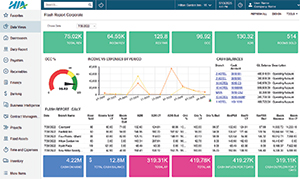 This coordination reduces fragmentation and enables a more cohesive travel environment, where decisions are not isolated but interconnected.
AI-Driven Retailing and Offer Optimization
Airlines are moving beyond fixed pricing models. Offers now need to reflect not just availability, but also current demand and traveler preferences.
Sabre’s AI-driven capabilities support this shift by enabling dynamic offer creation and optimization. Pricing can change based on real-time demand signals, while offers can be configured to match specific contexts.
This gives airlines more flexibility in how they price and present options. Instead of setting rules in advance, decisions are updated as conditions change. AI helps identify patterns in demand and pricing, making it easier to adjust offers at the right time. By integrating these capabilities within its platform, Sabre enables retailing strategies that are both adaptive and aligned with operational conditions.
 Balancing Speed with Control
The increasing speed of travel decision-making introduces a need for balance. Systems must respond quickly to changing conditions while maintaining clarity and oversight. Sabre addresses this by combining automated decision processes with human control. AI-driven insights and automation handle data interpretation and repetitive adjustments, while decision-makers retain authority over strategy and execution.
This balance ensures that faster responses do not reduce transparency. Teams can act quickly while maintaining visibility into how decisions are formed and applied.
The result is a decision environment that balances efficiency and control, enabling organizations to navigate complexity without losing alignment.
 Adapting to Continuous Change
Travel systems operate in an environment characterized by constant change. Demand fluctuations, operational disruptions and external conditions require systems to adjust continuously.
Sabre’s platforms enable these adjustments by allowing decisions to be updated in real time. Pricing, availability and operational configurations can be modified as new information comes in. This adaptability keeps the system aligned with current conditions rather than relying on outdated assumptions. The ability to adjust without delay is critical to maintaining operational continuity.
Travel as an Intelligent Decision Network
Travel technology is shifting toward viewing travel as a network of decisions rather than a sequence of transactions. Each interaction, from pricing adjustments to itinerary changes, represents a decision influenced by multiple data inputs. Sabre enables these decisions through AI-driven capabilities integrated across its platforms. By connecting systems and embedding intelligence within workflows, it enables a more coordinated and responsive decision-making.
Effectiveness depends on how well decisions are aligned across the network. The ability to interpret data, adjust outputs and maintain coordination determines how smoothly the travel ecosystem operates.
